



LongLife ECO floormarking tape for Ground Storage
Mark the correct storeage spaces with floor markings – sustainable and efficient.

LongLife ECO floormarking tape for Ground Storage
Price from
138.26 €
Product type
Floor marking
Max. Dimensions motif (L)
50,000 mm (The tape has a length of 50 m.)
Max. Dimensions motif (W)
100 mm (Versions in 50 mm, 70 mm, and...
Max. Number of colors/motifs
9 colors / 5 designs
Properties of the product
Non-slip, Self-adhesive, Low...
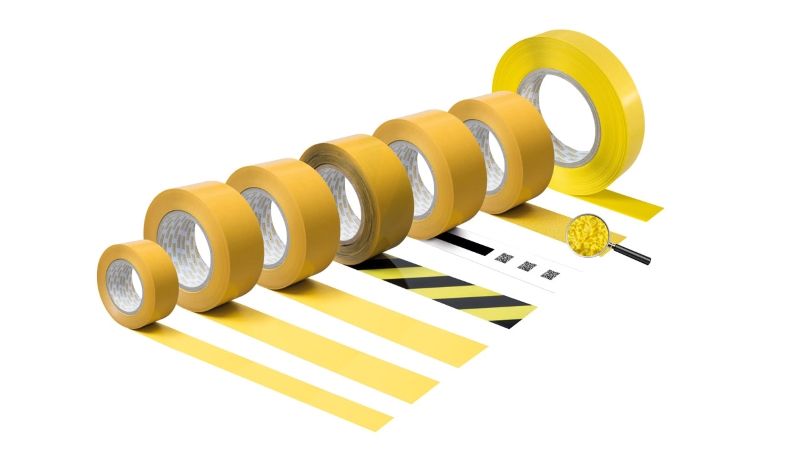
LongLife Floormarking Tape for Ground Storage
Use floor markings to indicate the correct locations for floor storage and increase safety in the warehouse.
LongLife Floormarking Tape for Ground Storage
Price from
125.65 € (Graduated price options)
Product type
Floor marking
Max. Dimensions motif (L)
50,000 mm (The tape has a length of 50 m.)
Max. Dimensions motif (W)
100 mm (Versions in 50 mm, 70 mm, and...
Max. Number of colors/motifs
9 colors / 5 designs
Properties of the product
Self-adhesive, Low maintenance

Poster Frame for Ground storage
Our poster frame is a sturdy, double-sided visualization tool for marking routes and traffic rules.