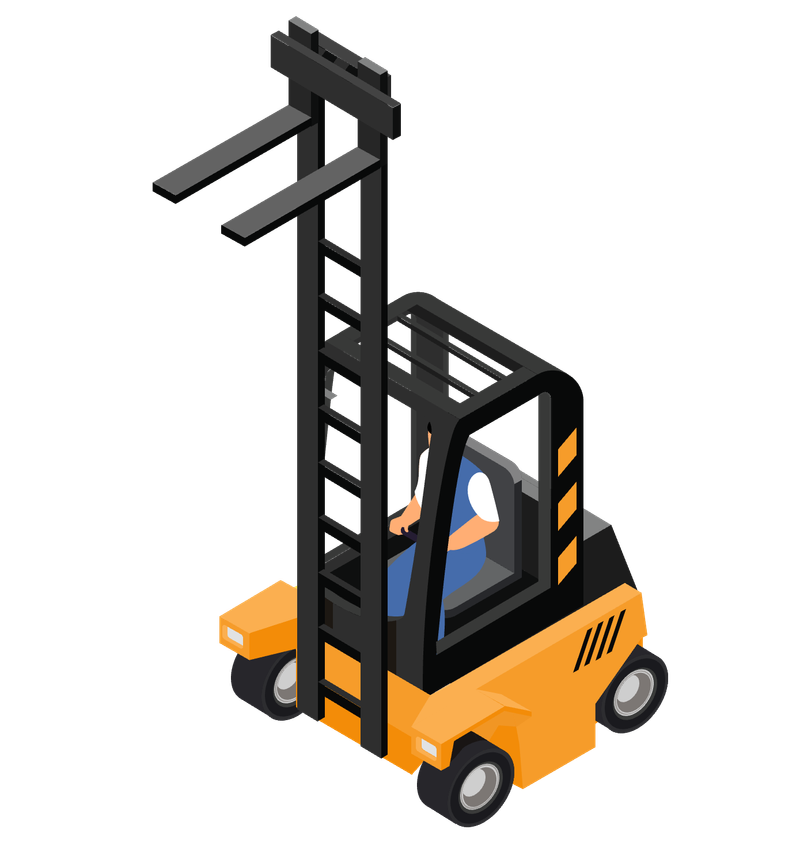
Increased productivity through faster scanning processes
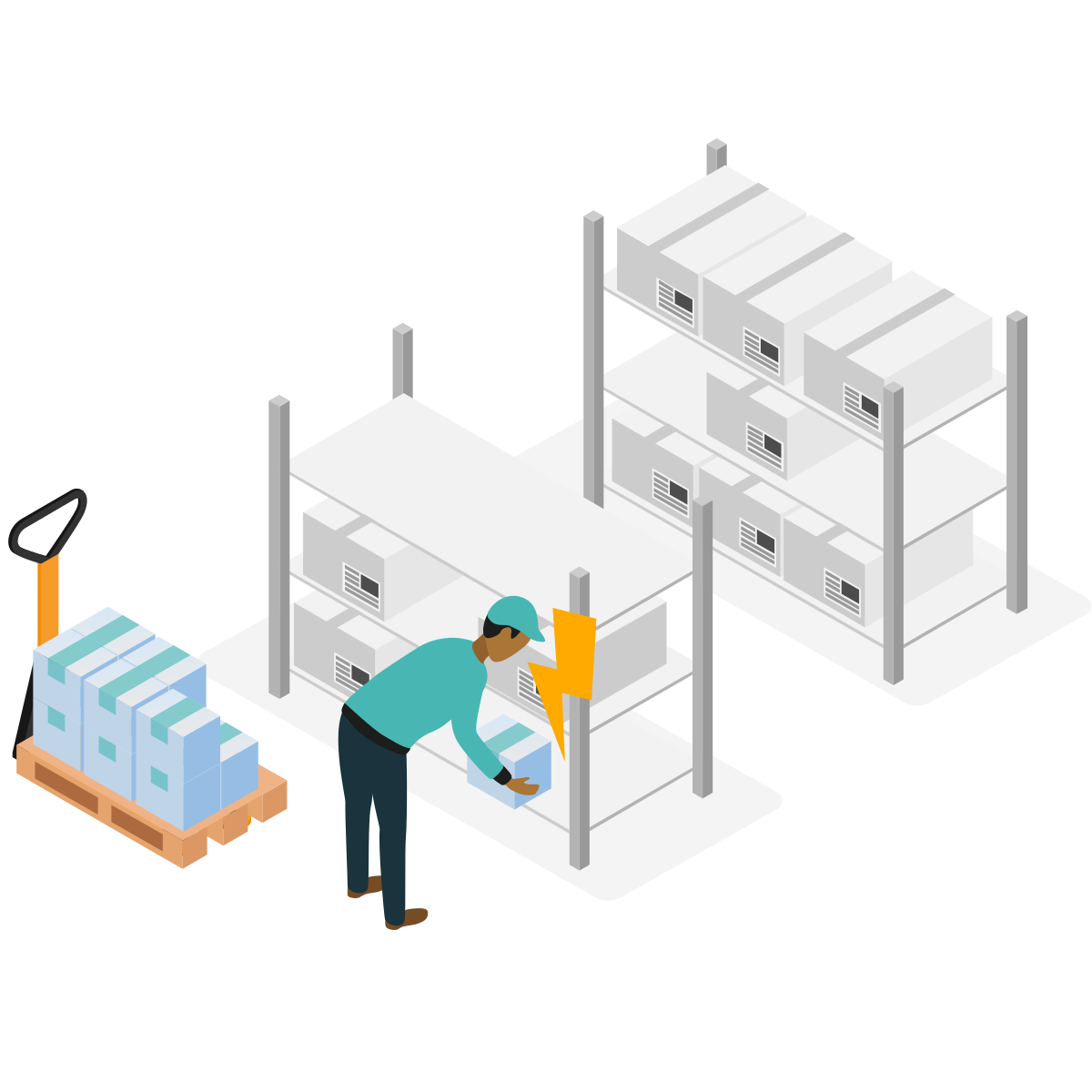
Improving occupational safety and ergonomics in the workplace
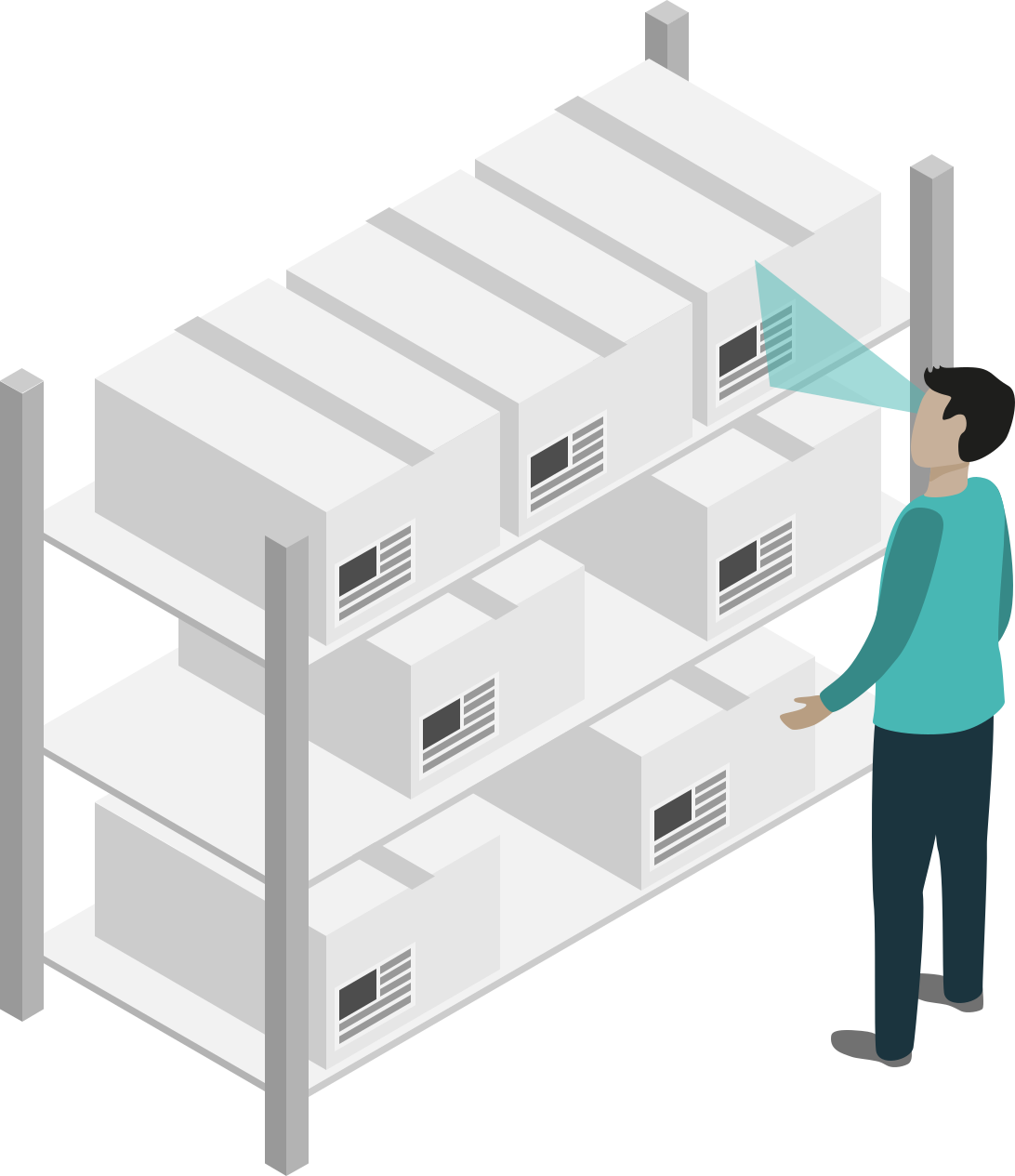
Error minimization in scanning processes
More Information
Medium-Term
timer
No Price Information Available
euro
To the Offerings
arrow_forward
Medium-Term
timer
No Price Information Available
euro
To the Offerings
arrow_forward
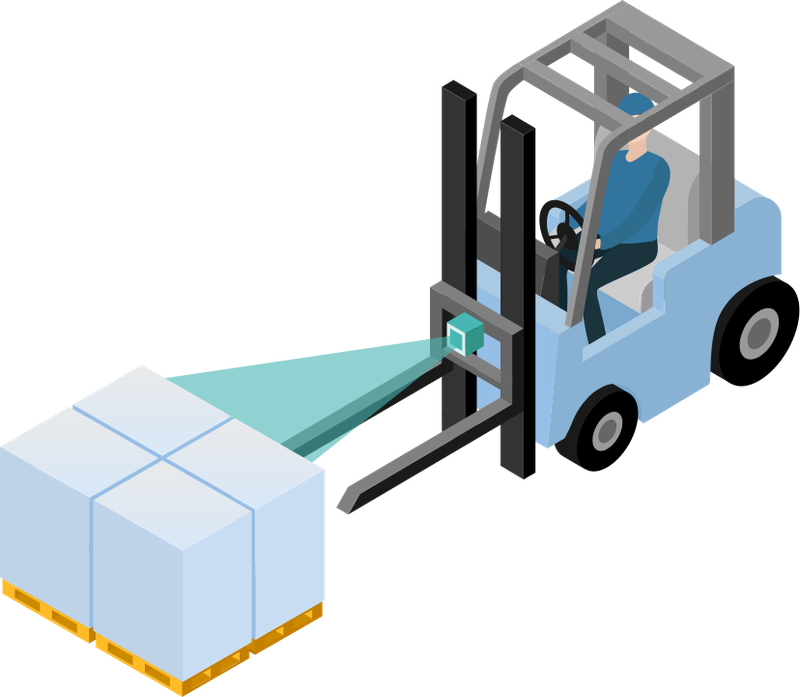
Automatic scanning by forklift truck instead of manual effort
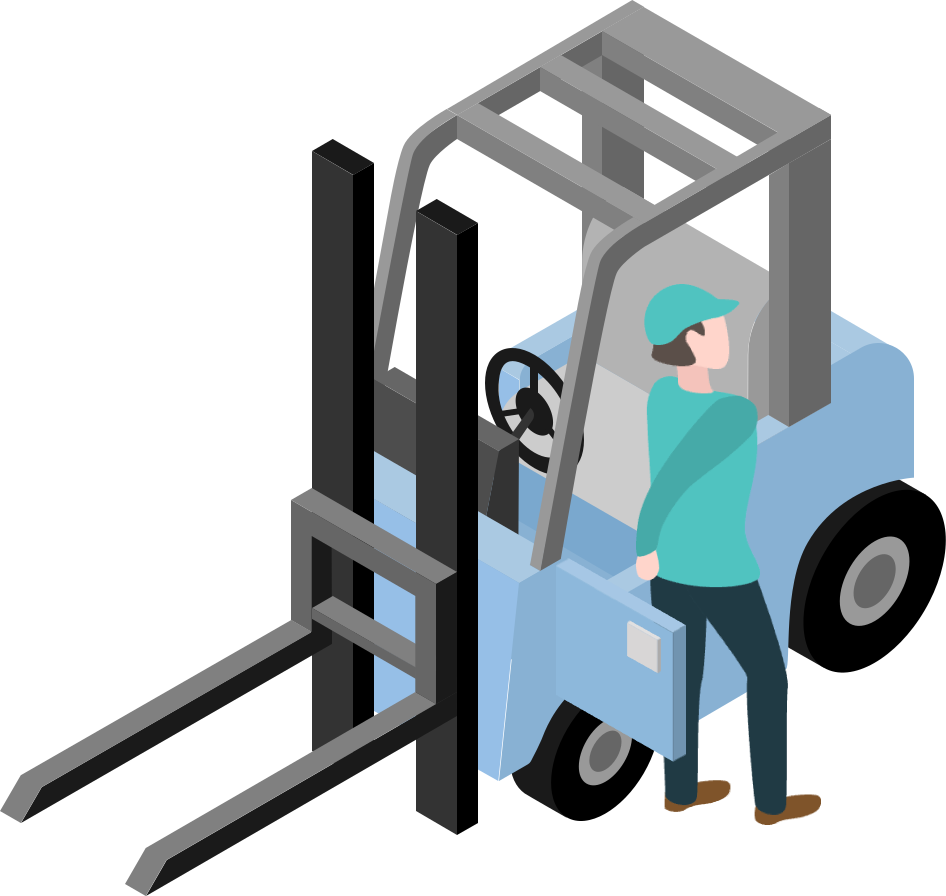
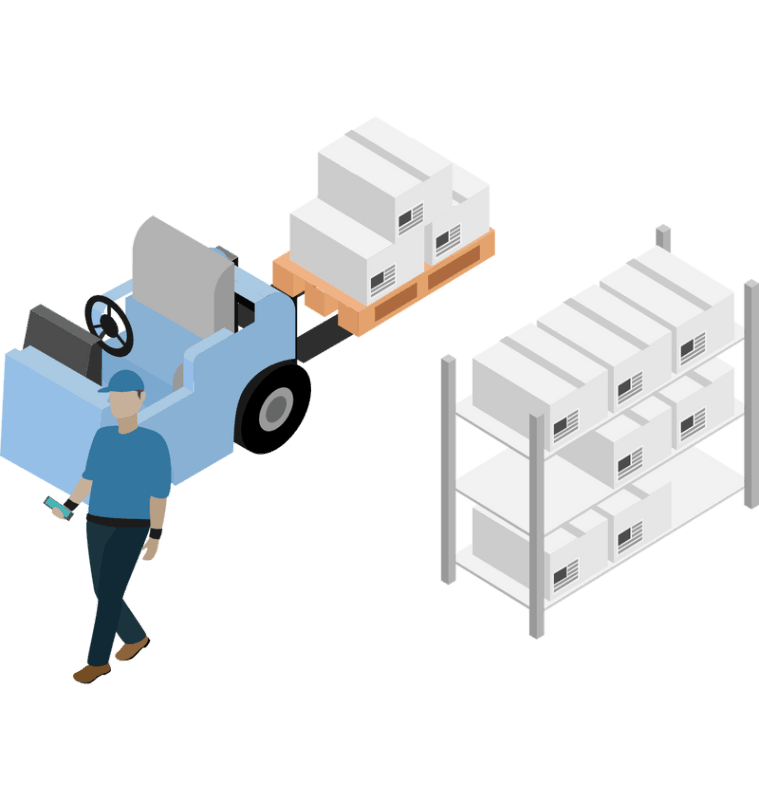
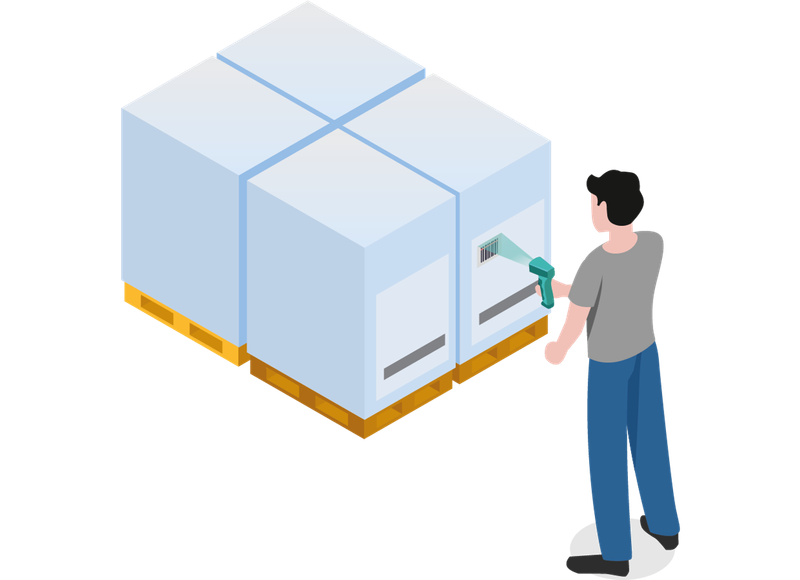
Goods are scanned several times a day in the warehouse, e.g. during storage, picking, sorting or retrieval. Employees usually use hand scanners for this, which is time-consuming and a safety hazard as they have to lean out of the driver's cab or leave the vehicle.
Read More Does this solution fit your needs?
Automatic Scanning by Forklift Truck - Solves the following Problems!
Select one of the problems. You will receive instructions that you can use to calculate optimization potential.
Effort for Receiving Goods
Storage and Retrieval errors
Entering and Exiting of Vehicles
Picking Errors
Waiting times (technical or organizational)
1
Determine relevant process steps
arrow_drop_down
For a detailed examination of the goods receiving process, it is useful to specify the necessary process steps. In this way, it is possible to examine how the time per step can be determined and reduced. For example, goods receipt includes scanning the goods at the receiving dock, checking and counting the goods at the receiving dock, entering the delivery data into the system on a PC, and so on.
2
Determine Time per Process Step
arrow_drop_down
The second step is to determine the current time required for the process steps to be optimized. Depending on the process step, different methods may be appropriate.
A
Motion-Mining®
arrow_drop_down
Motion-Mining® can be used to clearly define specific regions where process steps occur and analyse the time spent there. For example, the time spent at a PC or at a test station in a region can be determined. To further specify the time, for example, only the time spent standing, walking and handling in the regions can be considered. This would not take into account, for example, the time spent travelling to transport the goods.
B
Process Observation and Time Recording
arrow_drop_down
As part of time tracking, the time taken to complete a process step can be measured using a stopwatch or app.
C
MTM Process Modelling
arrow_drop_down
In particular, MTM can be used to model small-step processes. For example, MTM can help estimate how long it takes to fill in a form on a PC or how long it takes to scan a single page.
3
Determine Frequency of the Process Step
arrow_drop_down
In the third step, it must be considered how often the previously defined process steps occur per day.
A
Motion-Mining®
arrow_drop_down
Motion-Mining® can be used to record both the total time spent in an area per day and the frequency with which an area is visited or a tool is used.
B
Process Observation and Time Recording
arrow_drop_down
As part of time recording, the frequency of process steps can be determined with the help of a tally sheet or a corresponding app.
C
WMS Data Analysis
arrow_drop_down
Some process steps occur at regular intervals recorded in the WMS. If, for example, every package has to be scanned, the frequency of the scanning process corresponds to the number of packages recorded in the WMS per day. Analogously, this applies, for example, to the collection of the delivery bill, etc.
4
Determine time that can be saved
arrow_drop_down
Depending on the measurement, either the time per occurrence or the frequency of occurrence of a process step can be optimized. Based on this, it is necessary to determine how often a step should occur in the future and how long the step should optimally take. The difference between the actual time and the target time is the savings potential.
5
RoI Calculation
arrow_drop_down
The potential savings per day and per person are extrapolated to the number of employees and working days per year. This is compared with the costs of the considered investment.
Continue to the offerings.
Automatic Scanning by Forklift Truck - Find the Right Offering for You
Select products and receive detailed information. You can use the platform to contact product suppliers
Digiscan
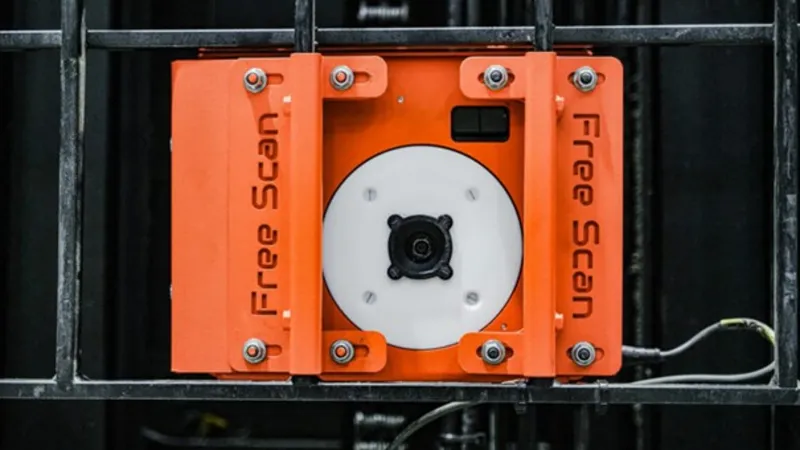
Digiscan eliminates manual scanning by equipping forklifts with automatic pallet scanners, ensuring faster operations, fewer errors, and better working conditions.
Automatic Scanning by Forklift Truck - The Following Solutions can also Solve the Pain Point
Here you can find other solutions, which are suitable for the optimization of the pain points (Effort for Receiving Goods) as well as variants of the current solution.