Robotics: Precision, Speed, Intelligence
Brief introduction: Why robotics is becoming a strategic factor in intralogistics
Robotics in logistics is no longer an innovation showcase. Higher service expectations, volatile demand, labor shortages, and cost pressure are driving companies to seek solutions that stabilize throughput, increase quality, and scale operations.
One point matters in particular: robotics rarely delivers value as a stand‑alone island. The decisive factor is fit-for-purpose integration into material flow, warehouse technology, and IT—because that is what enables standardized, resilient processes
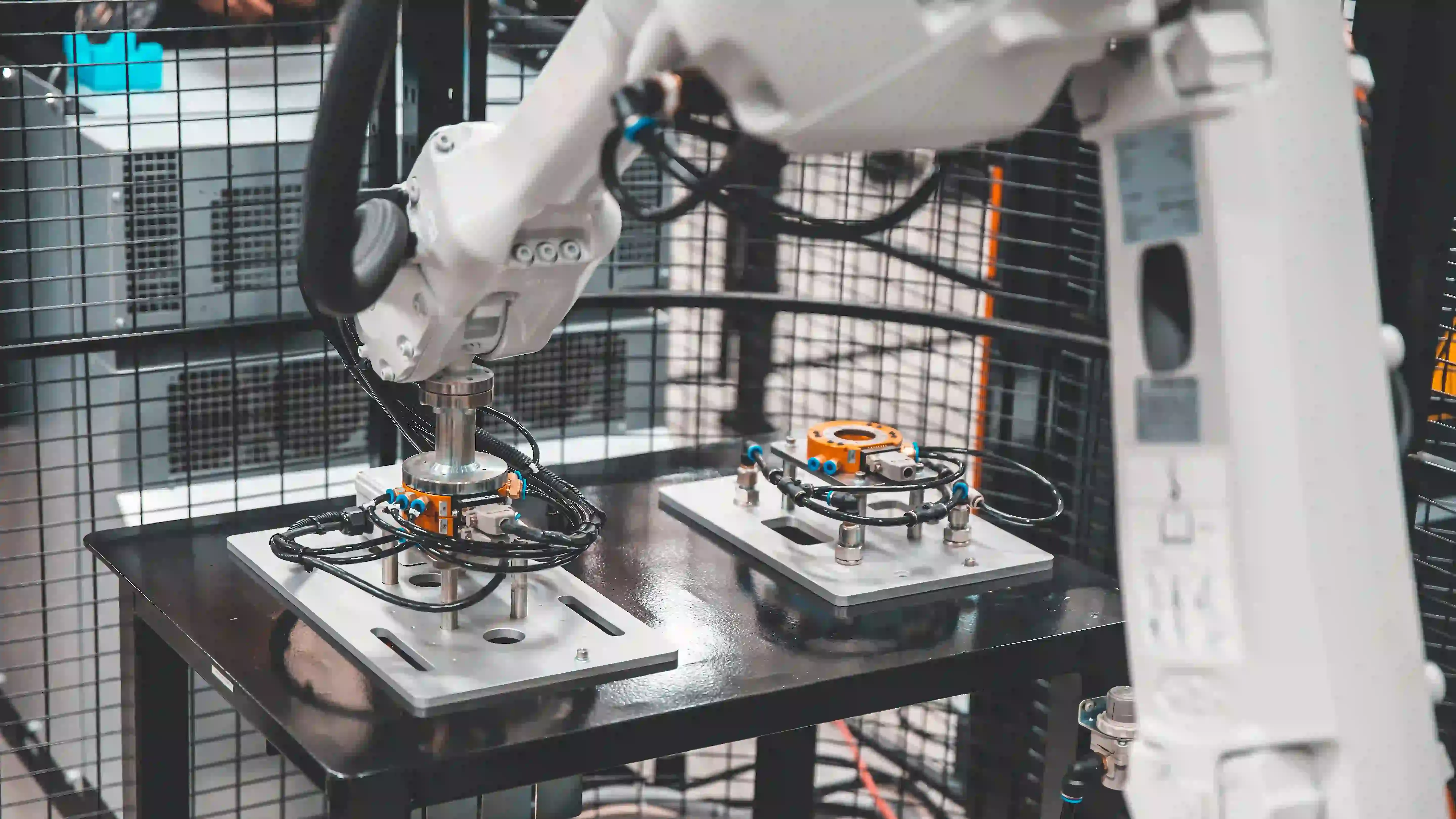 Mobile and stationary robotics—when precision and throughput drive day‑to‑day performance.
Core areas of logistics robotics
Logistics robotics is not a single product—it is a toolbox. Depending on the use case, mobile and stationary systems are combined with gripping/sensing technology and collaboration concepts.
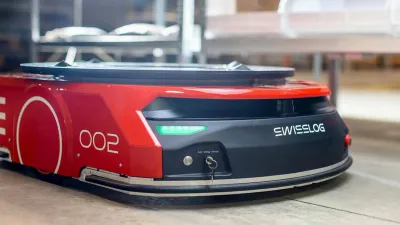
Mobile robotics: AMRs & AGVs
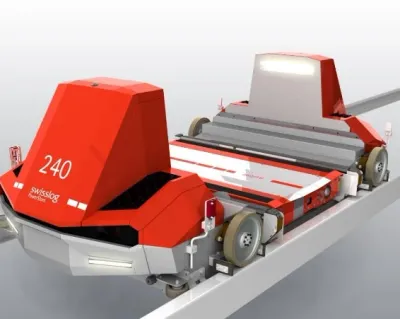
Mobile robots stabilize transport and replenishment processes in warehouses and production logistics—from line supply to handover at workstations. In brief:
- AMRs navigate flexibly and adjust routes dynamically—well suited for changing paths and layouts.
- AGVs typically follow predefined paths—strong in highly standardized transports with consistent throughput
Typical applications: production supply, inbound/outbound operations, internal transport, buffering and relocation workflows.
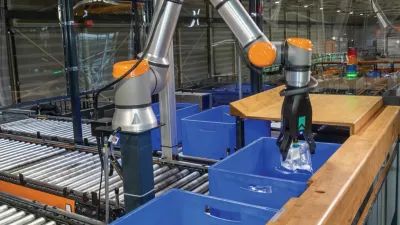
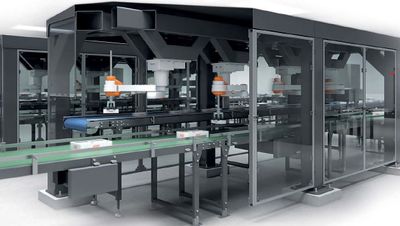
Stationary robotics: Picking & packing
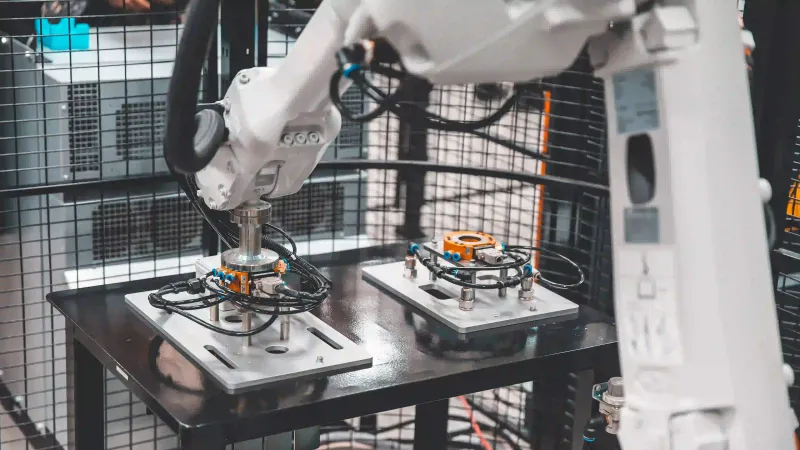
tationary systems primarily automate repetitive, high‑frequency steps: gripping, sorting, placing, packing—with precision and consistency.
Their value is highest when process conditions are stable (e.g., defined load carriers, predictable takt, recurring product groups).
Gripping & sensing technology: Robustness in real operations
Performance is not driven by the robot arm alone, but by the interaction of gripper and perception. Modern vision systems and force/tactile sensing help handle challenging items safely—especially where SKU variability is high or goods are sensitive.
In practice, questions matter such as: How stable is the system with changing packaging, lighting conditions, or partially unordered bins?
Human‑robot collaboration (HRC): Assistance instead of replacement
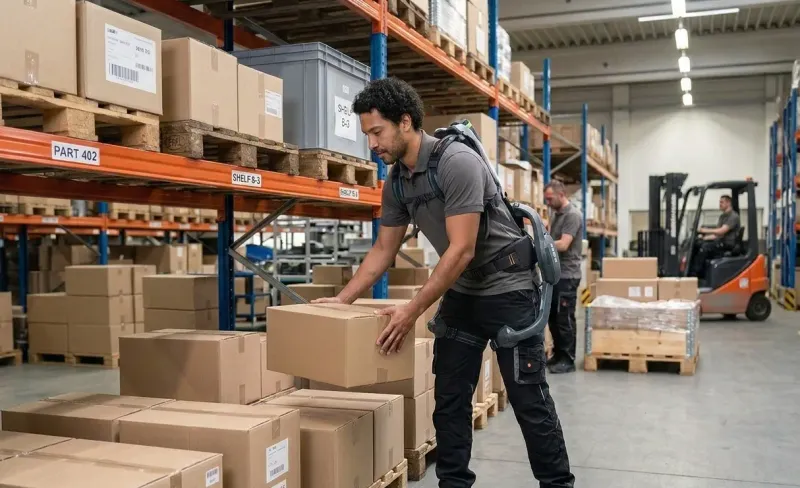
In HRC scenarios, people and robots work together without separating guards. Robots handle monotonous or physically demanding sub‑tasks, while employees focus on quality checks or decisions. This can improve productivity and ergonomics—provided roles and safety logic are clearly defined.
Current trends & challenges
Demand is shifting away from rigid automation lines toward systems that can adapt to changing requirements.
Flexibility & mobile applications
Seasonal peaks, changing assortments, and dynamic layouts increase the need for modular, scalable robotics. Mobile systems are gaining momentum because they can be reconfigured or redeployed faster—provided handover points, traffic rules, and process ownership are clearly defined.
AI‑enabled perception
AI improves object recognition and grasp‑point selection, expanding feasible use cases in less structured environments. At the same time, requirements rise for data quality, stability in continuous operation, and robust monitoring and maintainability.
Combining robotics with warehouse technology & software
Robotics delivers value only when orchestrated with WMS/ERP and, where relevant, additional warehouse technology: allocating tasks, managing priorities, coordinating fleets—here, integration directly determines productivity. Interfaces must not only work, they must remain scalable over time.
ROI & safety requirements
Robotics requires investment. Decision‑makers expect a credible payback—while safety and data protection requirements are increasing. ROI often depends on:
- realistic utilization (including peaks),
- stable integration (fewer downtime events),
- correct sizing (avoiding over‑ or under‑automation),
- clear safety concepts in mixed human/robot environments.
Outlook: Robotics as a building block—not an end in itself
Robotics will continue to establish itself as part of connected process chains—not as isolated solutions. The focus is shifting from “automation at any cost” toward intelligent, data‑driven systems designed to solve concrete operational challenges.
Successful programs therefore do not start with a catalog. They start with transparency: Where are the bottlenecks? Which steps are stable enough for automation? And which combination of mobile robotics, stationary cells, and software orchestration fits the site?
Top suppliers on MotionMiners SOLUTIONS
The most viewed suppliers in the robotics category on our platform currently include:
Known for integrated automation and material flow solutions, particularly in scaling warehouse and sortation environments.
Provider of automation and robotics‑adjacent intralogistics solutions with a strong focus on system integration.
Specializes in automation solutions for logistics processes, including picking and packing‑adjacent applications.
How does Motion‑Mining® support the selection of the right robotics solution?
Robotics is economically viable when it matches real process patterns. Motion‑Mining® provides a data‑driven foundation by making movements, travel shares, waiting times, and interactions objectively visible in day‑to‑day operations—without continuous manual observation.
This enables targeted prioritization of automation potential:
- Where is time lost (waiting, searching, detours)?
- Which process steps are best suited for mobile robotics, and which for stationary cells?
- What performance is realistic—and what does a credible ROI estimate look like?
In addition, an ergonomic lens can add value: where physically demanding tasks dominate, robotics can improve not only efficiency but also safety and employee satisfaction.