#DiscoverTheDifference: Automation yes but without special semi-trailers, please
“Trailers must be specially modified for automated truck loading.” – Why this assumption is no longer true today.
Automation, yes—but without special semi-trailers, please?
When it comes to automated loading and unloading systems for trucks, the same question often comes up:
“Do all trailers actually have to be specially modified for this?”
The reasoning behind this assumption is understandable. Many automated loading systems do indeed rely on customized trailers with built-in modifications. For companies, this often means high investment costs, limited flexibility in the transport fleet, and additional coordination efforts with freight carriers.
This is precisely why many companies are hesitant to adopt automated loading—even though the need for more efficient loading dock processes is constantly growing.
After all, the practical challenges are mounting:
rising cargo volumes, a shortage of drivers, intense time pressure at the loading docks, and, at the same time, the desire for greater process reliability and reduced downtime.
 Andreas Tissen, Sales Manager Automation Systems WDX – driving flexible and practical solutions for automated truck loading.
The Challenge of Traditional Automation Solutions
Many automated truck loading systems only function under certain conditions:
- Trailers must be technically modified.
- Third-party freight forwarders cannot be easily integrated.
- Flexibility in day-to-day transportation operations decreases.
- Additional modifications result in investment and maintenance costs.
The problem:
While automating loading offers enormous efficiency potential, it becomes less attractive if existing transport structures must be altered to accommodate it.
In shuttle traffic between the production plant and the logistics center, these traditional solutions are sufficient; however, especially in dynamic logistics networks with changing carriers and different trailer types, this quickly becomes an operational disadvantage.
The difference with the Q-Loader from WDX
The system requires no modifications to the truck trailer.
Standard trailers can continue to be used, allowing companies to retain their existing fleet and transportation infrastructure. This not only reduces investment costs but also significantly simplifies integration into existing logistics processes.
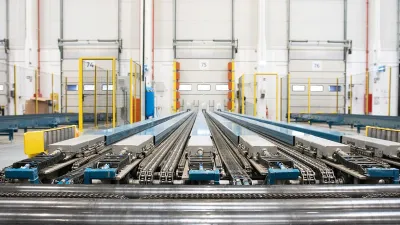
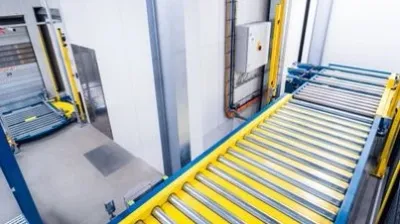
Automatic loading and unloading takes place via a loading platform that includes a trailer alignment unit, without requiring any additional technical modifications to the vehicle.
This provides a decisive advantage in day-to-day operations:
- Existing trailers remain flexible in their use.
- Third-party freight carriers can be easily integrated.
- Companies avoid high retrofitting costs.
- The implementation of automated loading becomes significantly more scalable.
- Processes at the loading dock become faster, safer, and more predictable.
Especially in high-traffic distribution centers or production logistics facilities with many daily truck movements, this enables a significant reduction in downtime and manual process steps.
Automation without compromising transport flexibility
The Q-Loader demonstrates that modern automation does not necessarily have to create new dependencies.
While many systems impose additional requirements on vehicles, WDX takes a different approach: maximum automation combined with maximum flexibility in transport operations.
For companies, this means:
more efficient loading dock processes, shorter turnaround times, and a scalable solution that can be integrated into existing logistics networks—without having to redesign the transport fleet.
Automatic Loading Reimagined
The future of intralogistics lies not only in automation itself, but in solutions that can be flexibly integrated into existing processes.
With WDX’s Q-Loader, automated truck loading becomes cost-effective, scalable, and, above all, practical—without the need for special trailers, complex modifications, or restrictions on daily transport operations.