#DiscoverTheDifference: How Many Errors Actually Occur in Picking and Sorting
"Our error rate is low."
This assumption is head often. And it is almost always wrong.
Not because teams are doing a bad job - but because no one truly measuring it.
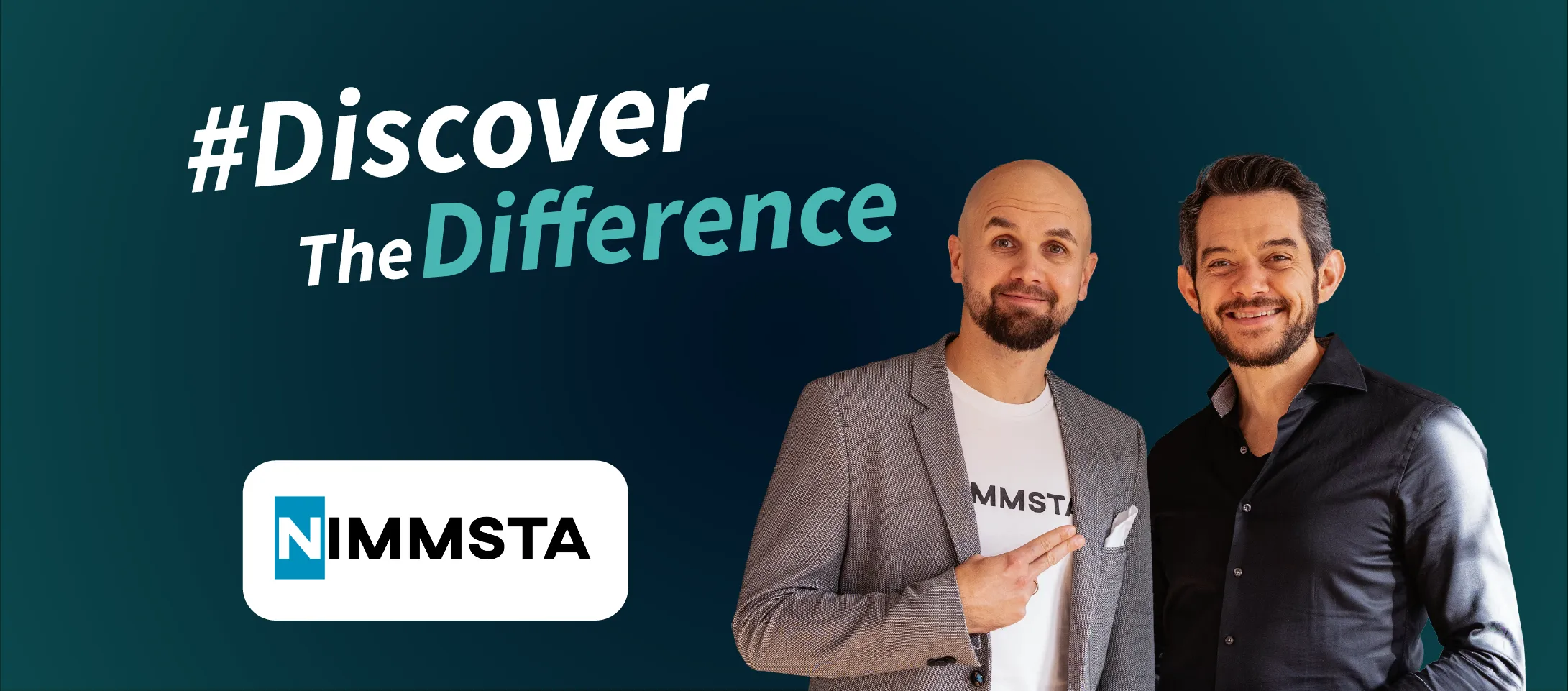 Andreas Funkenhauser and Florian Ruhland, NIMMSTA Management – driving the shift toward transparent and data‑driven picking and sorting processes.
When Gut Feeling Replaces Data
In many warehouses, the assessment of picking and sorting quality is based on complaints, samples, or experience.
What is missing is transparency.
Because:
- Not every error is reported
- Not every error is found
- Not every error is correctly assigned
The reality is: most errors remain invisible.
The Blind Spot in Picking and Sorting
Typical patterns that do not exist on paper – but are costly in the actual process:
- Incorrectly picked or sorted items are only discovered by the customer
- Shortages lead to re-deliveries and express shipments
- Quality issues are dismissed as “isolated cases”
- Training needs are not identified based on data
- Productivity is measured – quality is not
The problem: Without granular process data, quality is estimated – not managed.
The Difference with NIMMSTA
The difference begins with the first End-to-End Intralogistic Process Solution that understands picking and sorting as a controllable and data-driven process. The customer receives the process as a solution – without a large project involving multiple vendors.
With the NIMMSTA Process Solution, picking and sorting are digitally validated, analyzed, and continuously optimized – in real time:
- Every process step is digitally confirmed and documented
- Errors become visible immediately, not first at the customer or in outbound
- Granular quality and process data per employee, zone, order, and item
- Transparency over process variability: where do errors, delays, and inefficiencies really occur?
- Objective basis for coaching, training, and process design instead of gut feeling and samples
- Closed-loop optimization: data flows back into work instructions, prioritization, and process logic
- Measurable reduction of errors, rework, and process deviations
- The required hardware is included and a means to an end – ensuring stable long-term operations
This way, quality is not estimated but systematically measured, controlled, and scaled.
Execution becomes a controllable factor – not a black‑box variable.
Why This Matters
An error in picking or sorting does not end in the warehouse.
It becomes a cost and quality issue in transport, service, inventory – and ultimately for the customer.
You can’t improve what you can’t measure.
And in the warehouse, quality is often not measured today.
#DiscoverTheDifference between assumed and measured quality.
#NIMMSTA #ProcessSolution #Picking #Sorting #fromworktoflow
-400x105.png)