#DiscoverTheDifference: Fazit: Noticeably less strain: Why actively powered exoskeletons make the difference
A concern that comes up time and again in discussions about exoskeletons, and one of the most common reservations about the technology, is: “Won’t an exoskeleton cause my muscles to atrophy?”
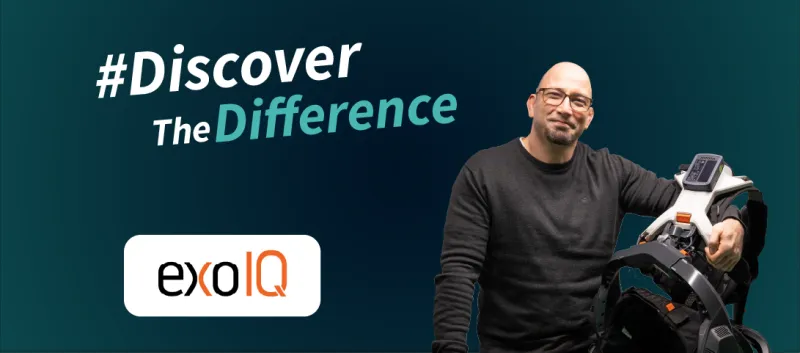
But the exact opposite is true: modern, actively powered exoskeletons, such as the B900 back exoskeleton from exoIQ, are designed to meaningfully support physical labour, and not to replace it.
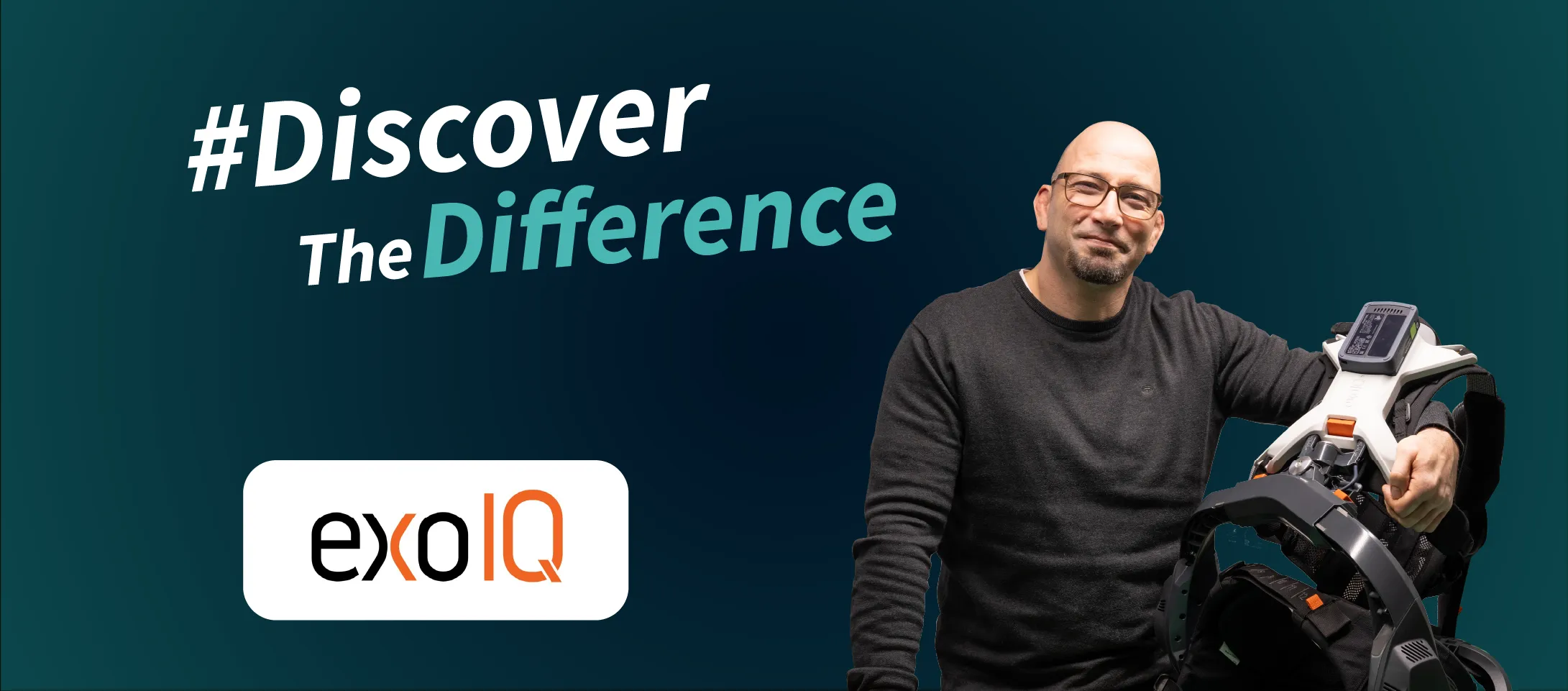 Andreas Argubi-Wollesen, Researcher at exoIQ – developing research-based solutions for greater ergonomics and sustainability in the workplace.
Muscle atrophy? A myth.
The concern about muscle atrophy is based on a simplified assumption: reduced external stress leads to less muscle activity, causing the muscles to atrophy. However, scientific findings and practical experience show that, as is so often the case, it’s all about getting the balance right:
- Constant physical overexertion leads to fatigue, poor posture and long-term discomfort
- Targeted relief, on the other hand, allows movements to be performed safely
- The muscles remain active, but are protected from excessive strain
Work-related physical complaints usually stem from excessive physical strain, and not from a lack of movement. This excessive physical strain often leads to repeated overexertion and can significantly impair performance. Active exoskeletons, such as the B900 back exoskeleton from exoIQ, address this very issue: they do not reduce physical activity, but instead provide targeted support. Much like an e-bike, the user’s own muscular effort remains while keeping it within safe and healthy limits via additional support; thereby helping to maintain performance over the long term. Active exoskeletons often provide greater and more individually adaptable support than their passive counterpart. However, neither one of these support systems reduce muscle activity below the level that would be necessary for theoretical muscle atrophy.
Why active exoskeletons make the difference
The question is therefore no longer whether exoskeletons provide support, but how they do so. The differences can be found here:
Passive systems provide mechanical, predefined support. The support force is designed to accommodate specific postures and movements.
Active exoskeletons generally work in the same way. However, the support force can be adjusted and controlled to provide a certain amount of force at a specific time in a set position. This control provides significantly greater flexibility in practice as it uniquely adapts to various movement patterns and work tasks, for an even more targeted and personalised support. As such, active exoskeletons create ergonomically safe work processes whilst maintaining natural movement patterns.
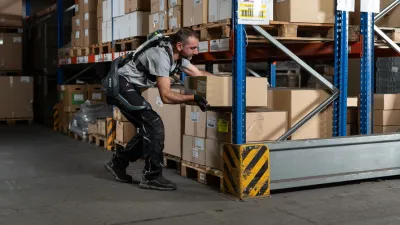
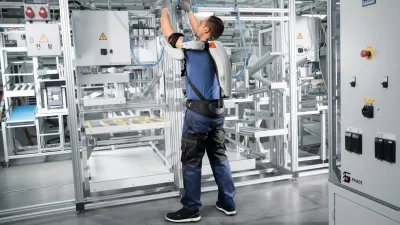
The B900 active back exoskeleton illustrates this approach in everyday working life: the active system provides support in logistics, production and skilled trades when lifting, carrying and leaning forward, while reducing the muscular strain and load on the lower back by up to 30 kg. At the same time, it allows unrestricted freedom of movement and can be adapted to different requirements.
Conclusion: Support without muscle atrophy – that’s what makes the difference
Active exoskeletons such as the B900 are a prime example of modern-day ergonomics: not less movement, but more ergonomic movement, without excessively straining the body. They protect the body from overexertion, maintain performance levels and adapt to dynamic work processes. This is precisely where their decisive advantage lies.
The result: noticeable relief, maximum freedom of movement, and a lasting contribution to health and quality of life in the workplace.