5 in 5 with Tino from Digilo
In the latest episode of our podcast "Logistics Solutions - 5 questions in 5 minutes" we welcome Tino Koumasse from Digilo. He talks about innovative digitization solutions in logistics and the challenges facing the industry. Digilo helps companies to optimize their processes and make them more transparent through intelligent sensor technology and data analysis.
 Digilo's Tino Koumasse talks about the benefits of digital solutions in logistics.
Listen to the episode here or continue reading the blog to find out the answers to the five key questions.
1. Briefly describe your company and product.
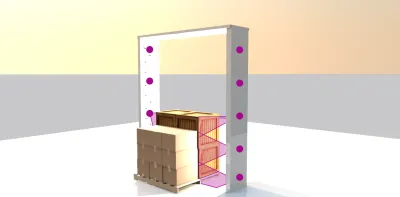
Digilo GmbH, based in Munich, Germany, has been specializing in the digitalization of logistics processes for four years. As a subsidiary of the E-Dentic/Barcodis Group (with 160 employees), we offer a wide range of IoT solutions and camera systems to make logistics processes more efficient, secure and transparent.
2. What problem do you solve?
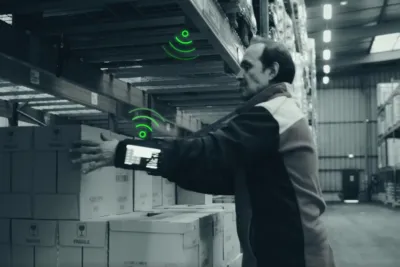
We digitize manual processes in intralogistics, such as loading and picking, to optimize ergonomics, productivity, quality and documentation. Our solutions enable our customers to prove to their customers that all processes have been carried out correctly and traceably.
3. What are your USPs?
Our solutions are unique because they focus not only on technology, but also on practical process optimization. We guarantee an ROI of 12 to 18 months and analyze processes on site to develop a customized solution for our customers' specific challenges.
4. Provide a specific application example or success story that illustrates how your solution works in practice.
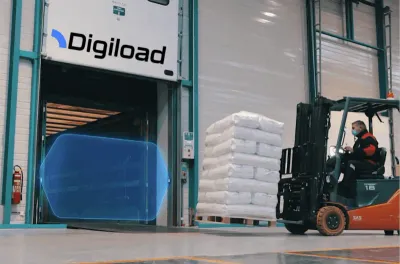
Our Digiload and Digitrack products are among our best-sellers and are already in use at over 50 warehouse locations. They prevent loading errors and ensure complete documentation. Due to the high efficiency of our solutions, we are receiving more and more requests from the industry.
5. What future developments or trends do you see in the logistics industry, and how are you preparing for them as a company?
Artificial intelligence has played a central role for us for several years. We integrate AI into our camera systems, and recently completed a project in which we installed cameras on automated guided vehicles (AGVs) to become the "eyes" of the robots and improve their environmental awareness.