5 in 5 with Philipp from Logisitkbude
In our latest podcast "Logistics Solutions – 5 Questions in 5 Minutes," we host Dr. Philipp Hüning from Logistikbude. He discusses their innovative solutions and the challenges in the logistics industry. Logistikbude is a startup from the Ruhr area specializing in automating the management of reusable assets.
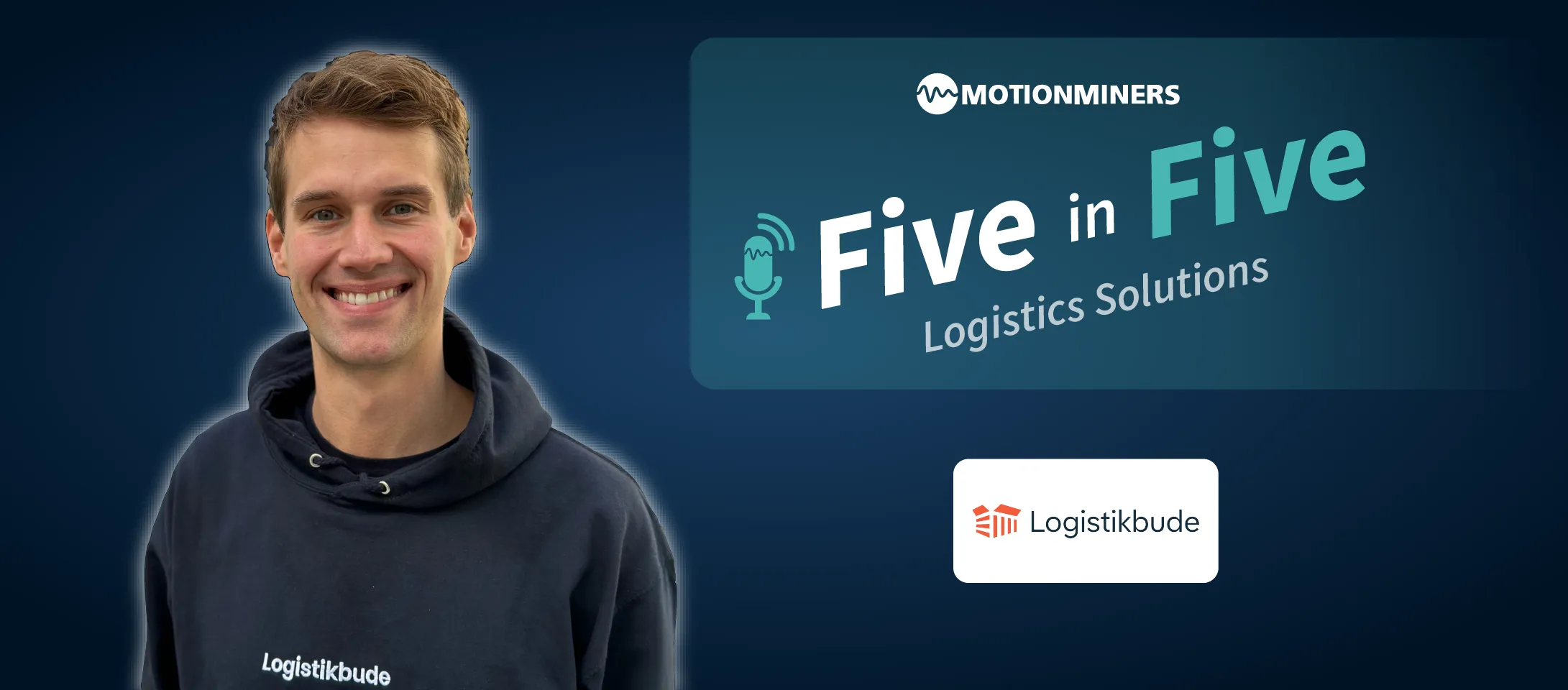 Dr. Philipp Hüning from Logistikbude discusses automating the management of reusable assets.
Listen to the episode here or continue reading the blog to find out the answers to the five key questions.
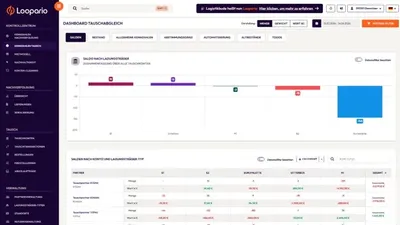
- Briefly describe your company and product. We, Logistikbude, are a logistics startup in the heart of the Ruhr area, founded in 2021 as a spin-off from Fraunhofer IML in Dortmund. Our mission is to automate the management of reusable assets such as pallets, containers, and racks—also known as load carriers, transport aids, or empties. With our user-friendly Software-as-a-Service solution, we provide real-time transparency over inventories, needs, and circulation times. Manual processes such as booking movements or coordinating with exchange partners are fully automated. Our customers—shippers, logistics service providers, and retailers—benefit from accelerated turnaround times, significantly reduced shrinkage rates, and substantial savings on asset replenishment. Our team currently consists of 22 employees based at the Technology Center Dortmund.
- What problem do you solve? The management of reusable assets is often associated with losses and inefficient processes. Load carriers get lost or are not in the right place, leading to long circulation times. There is often a lack of real-time transparency on the whereabouts of the assets, making proactive management impossible. Additionally, many processes related to reusable assets are still manual and labor-intensive, such as bookings, paper documentation, or account reconciliations. The result is either high asset replenishment costs or high personnel costs—often both simultaneously. Our solution eliminates these weaknesses by creating transparency and automating processes.
- What are your USPs? Our unique selling points can be summarized in two key areas: Independence and Flexibility: Our software is neutral and makes customers independent of specific load carrier providers. Existing data sources (ERP, WMS, TMS systems, RFID, IoT sensors, BLE trackers, barcodes) can be seamlessly integrated. We can map all types of load carriers—from reusable coffee cups to sea containers. Efficient Account Reconciliation: While other systems often rely on emails, phone calls, and PDF documents, we enable fully automated reconciliation via a weblink. This also makes collaboration with partners much more efficient.
- Provide a specific application example or success story that illustrates how your solution works in practice. A compelling example is our customer bekuplast. The entire load carrier management now runs paperless through our software. Previously time-consuming and error-prone processes have been fully digitized. This "pixels instead of paper" model shows how our solution contributes to greater efficiency and sustainability.
- What future developments or trends do you see in the logistics industry, and how are you preparing for them as a company? Trends vary globally: In Germany, Austria, and parts of Europe, retrofitting will be the focus for logistics enthusiasts in the coming years. In America and Asia, new constructions will continue. Technology manufacturers must adapt to these trends. The labor shortage will intensify, increasing the pressure for automation. The future will be exciting for innovative technologies that can communicate with the old world.