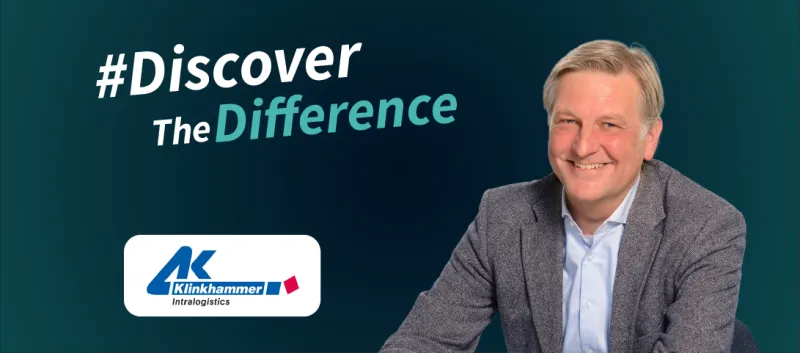
5 in 5 with Matthias from ipolog
In the latest episode of our podcast "Logistics Solutions - 5 Questions in 5 Minutes" Matthias Kellermann from ipolog is our guest. He talks about intelligent software solutions for logistics and production planning and sheds light on current challenges in the industry. ipolog supports companies in efficiently designing and optimising their material flows and production processes.
Listen to the episode here or continue reading the blog to find out the answers to the five key questions.
1. Briefly describe your company and product.
We founded ipolog 15 years ago as a hybrid company: on the one hand, we provided engineering services, designing hundreds of factories with 3D layouts and logistics optimizations for our customers. At the same time, we developed software solutions based on real-world challenges, providing valuable support for factory optimization.
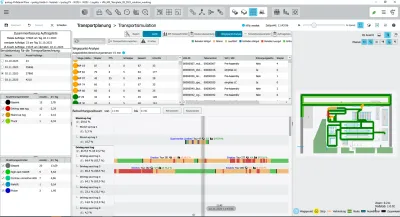
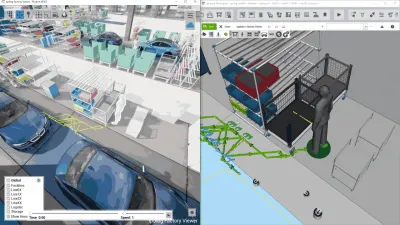
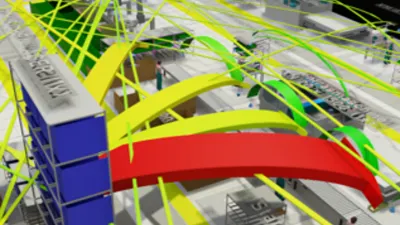
For the past five years, we have been fully focused on our ipolog software. With ipolog you can optimize assembly and logistics: the countless product variants in production can easily lead to a loss of overview. Our software enables you to visualize complex material supply directly in the layout - whether on the assembly line, in the supermarket or in the warehouse.
2. What problem do you solve?
Simply put: How much space, transportation resources, and manpower are needed for production logistics?
More specifically, our solution ensures optimal space utilization and enables route trains, autonomous robots, and forklifts to operate at the right time and in the right place. All of this ensures that production is reliably supplied with the necessary logistics resources!
3. What are your USPs?
- Dynamic line-back calculation – This determines how many resources are needed for a specific production program, whether for the next shift or long-term planning. The result? Increased output and reduced costs!
- Powerful data model for assembly and logistics – Our open interfaces ensure seamless data flow, eliminating data silos and creating an optimal synergy between assembly and logistics.
- Concrete visualization within the layout – Everyone involved can see a shared, unified representation of the current or future production setup. This ensures alignment, collaboration, and success!
4. Provide a specific application example or success story that illustrates how your solution works in practice.
One of our customers produces multiple model series of their legendary sports cars on a single production line. With ipolog, they ensure that materials for all component variants can be efficiently supplied. Given the constraints of their historically grown factory building, this is a real puzzle!
Additionally, with frequent monthly changes, they can anticipate shifts in production logistics in advance and optimize accordingly.
5. What future developments or trends do you see in the logistics industry, and how are you preparing for them as a company?
The global manufacturing network is facing new challenges due to rising tariffs, leading to an increased need for multi-variant production within a single facility.
With ipolog, our customers can efficiently prepare their factories to handle multiple product variants while optimizing internal logistics.
In addition, the Industrial Metaverse will help bridge the gap between planning and operations. Personally, I'm excited about this development because it has always been my vision to bring together different disciplines and factory phases.