5 in 5 with Gérôme from SAFELOG
In the latest episode of our podcast “Logistics Solutions - 5 questions in 5 minutes”, we welcome Gérome Stemmer from SAFELOG. He talks about SAFELOGs innovative automation solutions, in particular the use of AGVs (Automated Guided Vehicles), and the current challenges facing the industry. SAFELOG supports companies in future-proofing their logistics processes with flexible and efficient automation solutions.
 Gérôme Stemmer from Safelog talks about the benefits of automation solutions and AGVs in logistics.
Listen to the episode here or continue reading the blog to find out the answers to the five key questions.
1. Briefly describe your company and product.
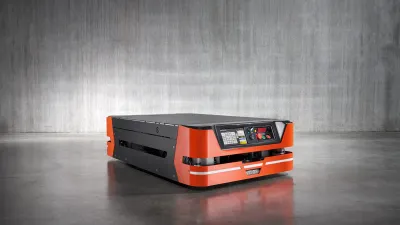
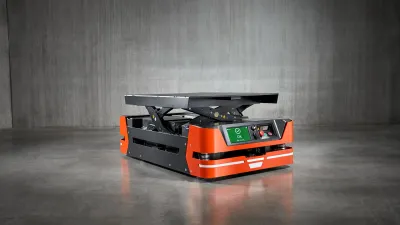
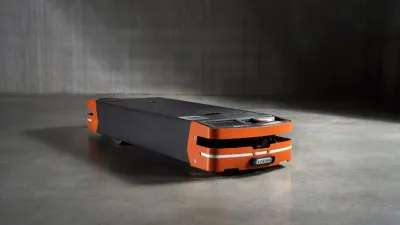
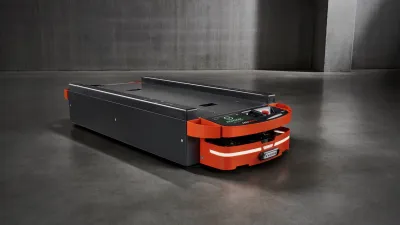
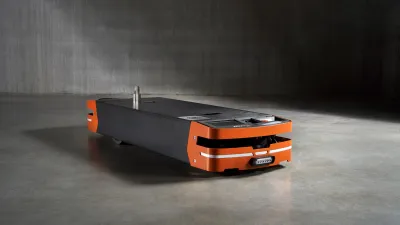
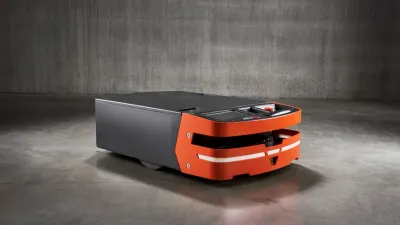
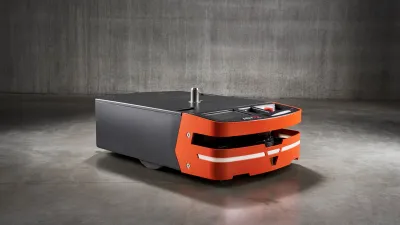
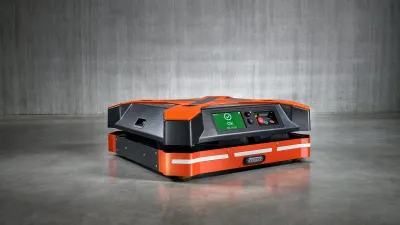
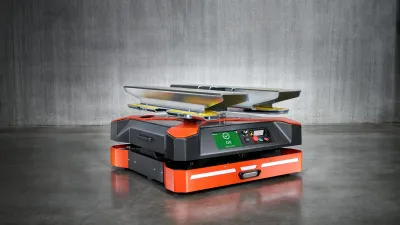
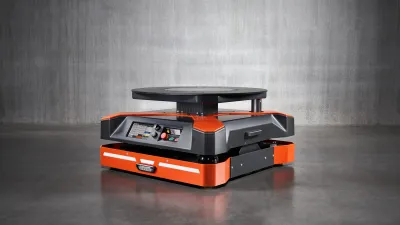
SAFELOG GmbH from Markt Schwaben near Munich is a leading software-based provider for the development and intelligent linking of innovative logistics systems. The aim is to be able to offer holistic logistics solutions with mobile robots. Our portfolio includes various software modules as well as the necessary hardware and services. The SAFELOG software stack starts with the robot software on the individual devices and extends to the control software for orchestrating a robot fleet. In the future, however, we also want to control robots from other manufacturers using our software, as we have done with some models from our partner STÄUBLI, for example.
2. What problem do you solve?
In the logistics and production halls of this world, we solve all transport problems in intralogistics that our customers face, from incoming goods to outgoing goods, provided that they can be mapped by mobile robots. We summarize these tasks under the keywords “pick”, “move” and “assemble”.
“pick":
- Goods-to-Person (GTP, G2P), including Shelf-to-Person, Pallet-to-Person
- Person-to-Goods (PTG, P2G)
- (mobile)Robot-to-Robot (RTR, mRtR)
“move":
- Variety of small load carriers (KLTs), load carriers, trolleys, pallets, pallet cages
- Loads from 0 to 1,500 kg
- Floor to floor applications and loads over 1,500 kg can be mapped with Stäubli partner devices
“assemble":
- Delivery to/in assembly lines or (robot) welding cells
- Use of the mobile robots as an assembly platform
We realize this with our portfolio of mobile robots, peripheral hardware and our own software. Our credo is to solve the task at hand with as little technical effort as possible, i.e. not to use components that are not required for the specific process. A flexible approach is absolutely essential for the success of brownfield projects in particular.
3. What are your USPs?
SAFELOG offers end-to-end complete solutions. From consulting to the necessary software and hardware to after-sales services. It is important to us to be both the customer's partner and the sole point of contact for the joint project. This is why we want to retain control over our products and develop all the software and hardware in-house. We have our own complete software stack so that we are independent of third-party providers in terms of IT technology. Thanks to the high proportion of our own software, we can solve many problems that arise in projects with clever software solutions. At the same time, we also integrate our products ourselves at the customer's premises and are on site with a project team to put the solutions into operation and train the customer's employees. Together with our integration partners, we also offer service and maintenance concepts to ensure successful operations even after the end of the project.
4. Provide a concrete use case or success story that illustrates how your solution works in practice.
We have successfully completed projects across many sectors. It's difficult to pick just one, but the projects from the automotive sector in Factory 56 and Hall 46 at Mercedes Benz in Sindelfingen are probably the most suitable. At Factory 56, intralogistics tasks such as shopping basket processes or the JIT / JIS delivery of components such as seats or drive components to the assembly line were automated. In total, more than 550 mobile robots from SAFELOG are used. At the same time, the Mercedes and SAFELOG teams developed various software solutions to control, map and monitor the processes in real time. The experience gained from the project in Factory 56 was used as a blueprint for the conversion of the production facility in Hall 46, where more than 350 mobile robots are used in various circuits. The lessons learned from the automotive sector have helped us to further develop our products and reduce the costs of both the robots themselves and their implementation.
We are currently seeing that goods-to-person, shelf-to-person and pallet-to-person are the applications that are most in demand. These involve the delivery of shelves or other goods carriers to workstations or picking stations. This saves walking distances and improves ergonomics. In the recent past, we at REUTER and Joseph Dresselhaus GmbH & Co. KG have successfully implemented corresponding projects, which we have also documented on our YouTube channel.
5. What future developments or trends do you see in the logistics industry and how are you preparing as a company?
Working conditions in the warehouses and on the store floor can be further improved by using mobile robots, for example in areas such as cold, noise or shift work. The robots can relieve the workers in these areas of simple transportation tasks and a range of other activities.
We also see it as a great opportunity to massively reduce the effort required to implement projects in the future. This applies not only to project planning, but also to change management, so that projects become cheaper for the customer overall, amortize faster, are easier to handle and changes can be implemented more quickly.