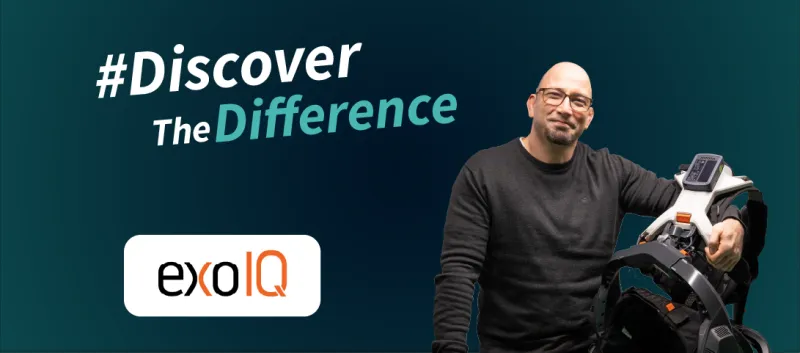
5 in 5 with Andreas from exoIQ
In our latest podcast "Logistics Solutions – 5 Questions in 5 Minutes," we host Andreas Argubi from exoIQ. He discusses their innovative solutions and the challenges in the logistics industry. exoIQ is a company specializing in the development of exoskeletons to support the workforce.
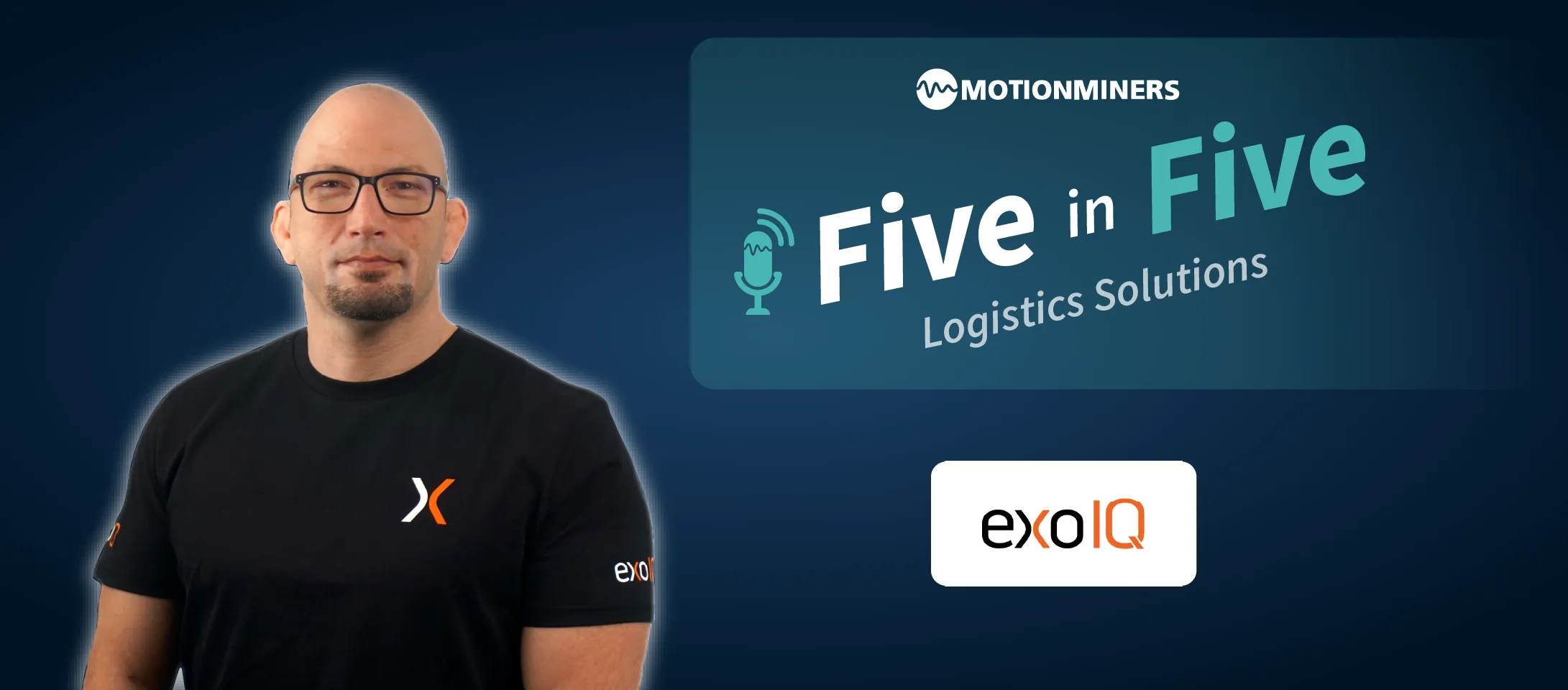 Andreas Argubi from exoIQ discusses the benefits of exoskeletons in logistics.
Listen to the episode here or continue reading the blog to find out the answers to the five key questions.
1. Briefly describe your company and product.
Founded in 2017, exoIQ GmbH originated from the "SmartASSIST" research project at Helmut-Schmidt-University in Hamburg. The research focused on the health-promoting potentials of wearable support systems (exoskeletons) for physically working individuals. We analyzed the needs of industry and logistics for employee support and have since been working at exoIQ to provide this support to companies and their employees through our exoskeletons.
2. What problem do you solve?
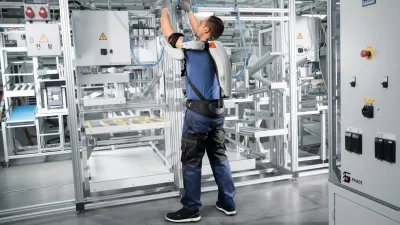
Currently, there are two major physical problem areas for physically working people in logistics: lower back pain and shoulder and neck issues. Both are caused by overexertion in different activities. Lower back issues mainly arise from tasks involving forward bending of the upper body, while shoulder problems are mostly due to tasks performed at shoulder height or above. Our actively controllable exoskeleton S700 supports employees in these tasks, reducing physical strain.
3. What are your USPs?
Physical activities in logistics are diverse and require tailored support. The S700, equipped with an external power source (a battery), allows us to adjust the support to the specific requirements of the tasks. We use presets that can be activated at the push of a button. This adaptability to tasks with different movements and load weights is the significant difference compared to passive exoskeletons operated by spring mechanisms.
4. Provide a specific application example or success story that illustrates how your solution works in practice.
In industry and production, we see many applications where arms need to be held in an elevated position for extended periods, such as in assembly work. Here, static holding tasks determine the load case. Employees in logistics often move external loads, such as moving boxes in and out of shelves or over conveyor belts. These movements are generally more dynamic. For example, when loading goods from bottom to top, the exoskeleton provides arm support for lifting the load. When lowering without a load, this support is no longer needed. Depending on the selected preset, the support is automatically turned on or off. Our active exoskeleton S700 provides support exactly when needed.
5. What future developments or trends do you see in the logistics industry, and how are you preparing for them as a company?
Automation and digitalization continue to increase in logistics. At the same time, topics such as employee health and safety are becoming more important to address the challenges of an aging society. Exoskeletons like the S700 actively contribute to both topics by helping to reduce physical strain. This helps employers secure the know-how and flexibility of their employees. Additionally, with the associated exoIQ app, we provide a digital tool that makes this relief function transparent and traceable for all users directly at the workplace.