Exoskeletons: People and Technology in Balance
Physical strain is part of everyday life in logistics and intralogistics. Lifting, carrying, overhead work - movement patterns that repeat hundreds of times each day and can lead to long‑term musculoskeletal disorders. Exoskeletons are therefore moving into focus as a component of occupational health prevention and ergonomic workplace design. But what’s behind the technology, where does the industry stand today and where is it headed?
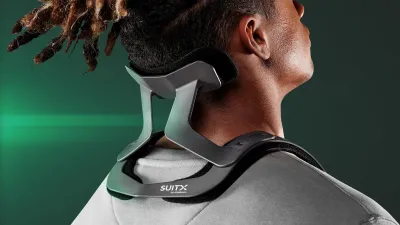
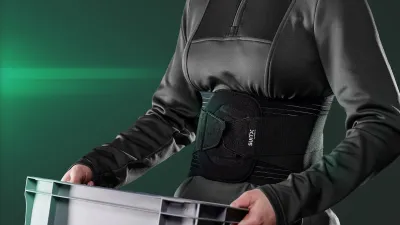
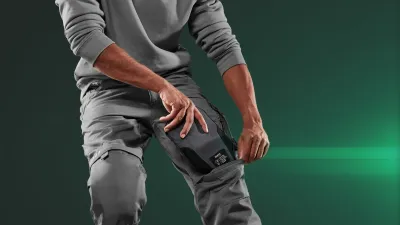
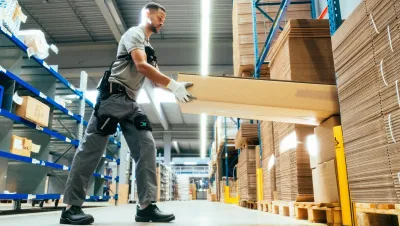
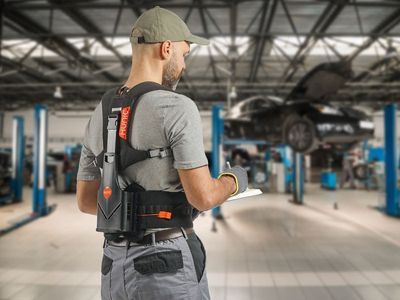
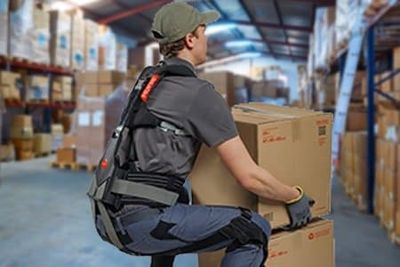
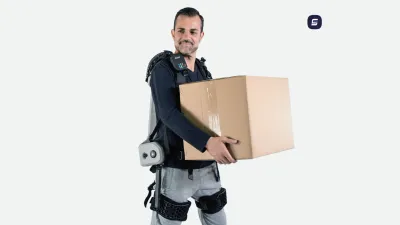
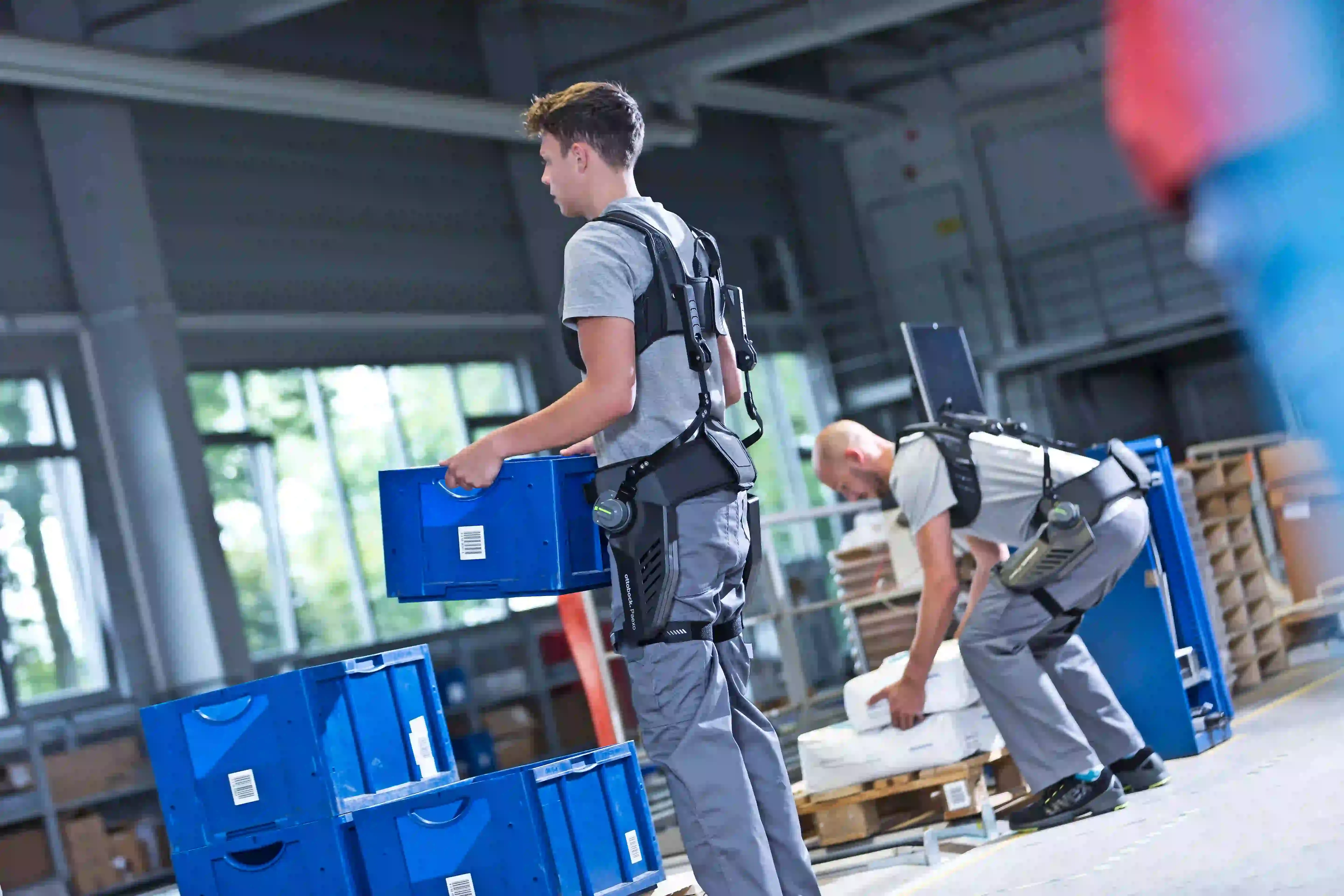 Real‑world application: exoskeletons as a building block of modern ergonomics.
Passive and Active Systems: Two Approaches, One Goal
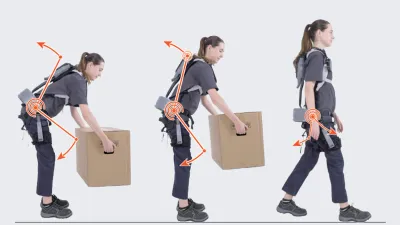
Passive exoskeletons require no external power. By storing and redistributing forces (via springs, dampers, or mechanical structures), they reduce load on the shoulders, back, or knees. Typical advantages include low weight, simple handling, and minimal maintenance, making them suitable for repetitive lifting or sustained trunk flexion.
Active exoskeletons combine sensors and powered actuators (e.g., electric motors) to deliver targeted assistance. They can support dynamic tasks and adapt to individual movement patterns, but require power supply, careful adjustment, and strong user acceptance.
Typical use cases in intralogistics
- Lifting & carrying support: e.g., heavy‑duty picking or moving boxes/totes.
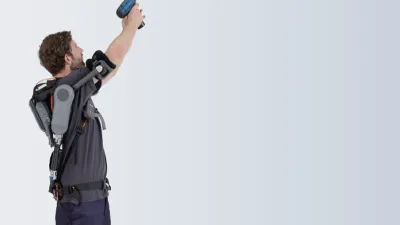
- Overhead work: e.g., assembly, maintenance, or securing at height.
- Static postures: e.g., inspection, fastening, or labeling over extended periods.
Integration into ergonomic workstation concepts is not automatic. Exoskeletons deliver full value only when combined with a thorough workplace and process analysis, ideally based on objective movement and load data (reach zones, heights, takt, travel paths).
Current trends & challenges
Acceptance & ergonomics
The best technology is ineffective if it is not worn. Acceptance depends on comfort, fit, weight, donning time, and the introduction process. Real‑world line trials, short ramp‑up phases, clear do/don’t guidance, and re‑fittings help prevent misadjustments and new strains.
Economics & training needs
ROI rarely comes from a single metric. Impact shows up as more stable takt, fewer micro‑pauses, lower error rates, and potentially fewer complaints and absences - benefits that are real but not always immediately monetizable. Effective adoption requires training, on‑the‑job coaching, and change support; otherwise, systems remain under‑used or misused.
Standardization & certification
The regulatory landscape is still maturing. Harmonized standards and certification procedures are missing in many areas, complicating procurement and liability assessments. Clear minimum requirements in RFPs - weight, adjustability, materials, hygiene/cleaning, service, documentation - help keep selection and operation auditable.
Combining exoskeletons with wearables & sensors
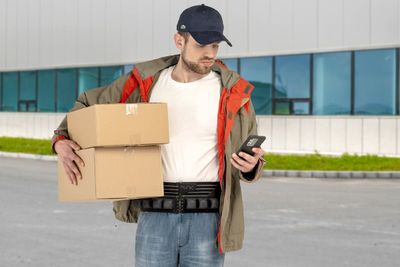
Pairing exoskeletons with wearables/motion sensors is gaining ground. This enables objective measurement of load hot spots, usage patterns, and effects (e.g., overhead time), allowing companies to steer usage windows, avoid over‑/under‑provisioning, and demonstrate effectiveness to safety, HR, and employee representatives. In short: data replaces gut feel.
Outlook: Data‑driven ergonomics as the key
The trajectory points to lighter, smarter, better‑fitting systems and a tighter link with digital analytics. Expect solutions that not only provide support but also capture movement data and turn insights directly into actionable recommendations. For logistics organizations, the strategic entry point is not a catalog purchase; it is an objective baseline of real physical loads. Understanding where strain truly occurs leads to better investment decisions and targeted use where exoskeletons actually make a difference.
Top suppliers on MotionMiners SOLUTIONS
The most viewed suppliers in the field of exoskeletons on our platform include:
Exoskeleton solutions rooted in medical technology, backed by extensive biomechanical expertise and a broad portfolio focused on tangible day‑to‑day relief.
SoftExo concepts shaped by physiotherapy and sports science; lightweight textile supports that adapt closely to the job for healthier, more motivated work.
Exoskeleton robots for industrial, medical, and educational applications, built on a scalable technology platform with a focus on adaptability.
How does Motion-Mining® support the selection of the right exoskeleton ?
Motion‑Mining® provides the data foundation for informed, evidence‑based decisions.
- Make loads objectively visible: Sensor‑based capture of typical postures, lifting movements, and overhead work directly in the live process. The outcome is robust KPIs for each task, area, and shift.
- Derive deployment logic: Identify the critical process steps where exoskeletons deliver measurable relief. This also enables recommendations on combining exoskeletons with complementary aids (e.g., lift/roll assists).
- Steer integration & operations reliably: A/B comparisons in real operations make integration effects transparent.
- Test systems & determine the best fit: Evaluate different exoskeletons through comparative trials and data‑driven analysis to determine the optimal fit for your process environment. Optional: with BIONIC ANALYTICS as a structured pilot package (6–8 weeks, incl. 15 working days with/without exoskeleton) based on Motion‑Mining® technology.